

Gabriel Karandyšovský
Industry Researcher, Content Producer, and Analyst

Much of the language industry today revolves around the two-way highway between the company (the buyer) and the service provider (tech supplier, LSP, or the linguist). In this relationship, the focus is on addressing the buyer’s needs (or making the sale, depending on your outlook), whether by implementing the latest tech advancements or finding a creative solution to their problems.
There’s a third party — the end-users — who are often omitted from the discussion, but who are equally important. Where did they go?
We’re thankfully now moving past the hype and seeing language AI becoming an accepted part of the landscape. However, questions about the use of AI persist, ranging from quality and ethics to representation and inclusivity. What makes now a particularly interesting point in time to reassess what we do (and how we talk about it) is the absence of the end-user in the discussion. You could say the end-user’s perspective has always held an awkward place in the localization conversation because how do you reflect it in business practice?
And so this begs a question: Aren’t we, the buyers, the service providers, the tech suppliers, too self-centered? We rushed to figure out AI’s fit. We’re now comparing and deciding which LLM-based tools are the best. Have we pushed other considerations, such as the preferences of end-users, to the side?
This is not to say that savvy companies haven’t been doing their due diligence, with user research teams bent on anticipating users’ needs and incorporating this precious feedback in product development. But this area is still under construction.
This is why we decided to gauge sentiment on AI by running an end-user survey in June and July on a panel of respondents in eight countries. Perhaps looking to the user for answers is the reality check the language industry needs. Some of the answers we obtained are illuminating, some you could have reasonably predicted. Some lead to yet more questions. Either way, as we’re collectively trying to figure out the future and what it may bring, we present three key takeaways from our research to reflect on and shape the ongoing conversations you may be having.
#1: Humans are AI-biased
Humans are biased toward AI. How about you, dear reader?
In the survey, we asked respondents whether they preferred human-made content, and a significant majority (80.7%) agreed. Humans still prefer humans. However obvious the answer, it was a choice we wanted to verify.
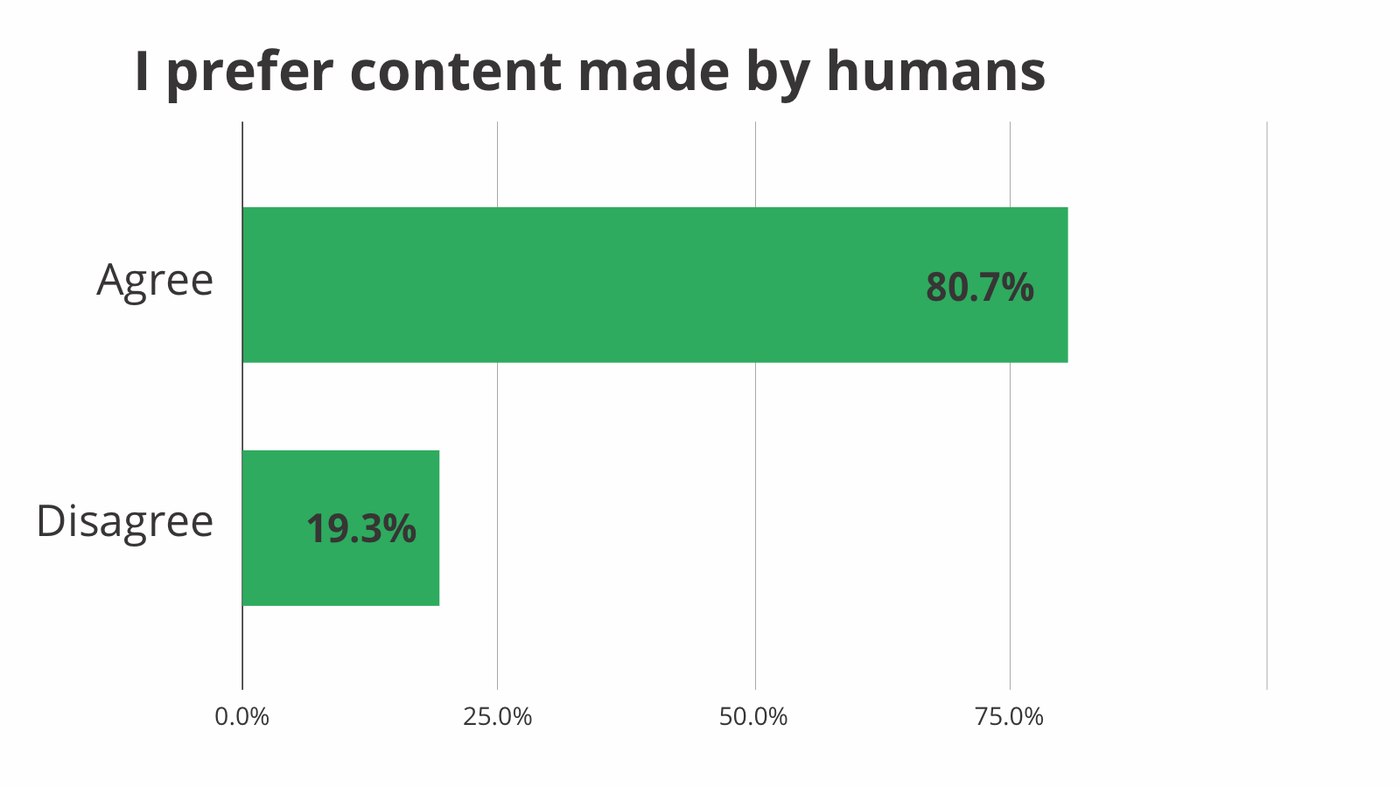
AI bias is a good thing, especially for the creative professions that make up the backbone of the language industry — as the hype dies down and reality sets in, they will still have a job. This assumes the user can distinguish machine-generated content from human-made content, which we verified during the survey and is far from a foregone conclusion (see below). But there are a few things to note here:
- The AI hype and associated doomsaying of the last two years have left their mark with a negative perception of AI. This will vary depending on where you are, but it is becoming something AI developers and adopters need to account for if AI initiatives are to succeed.
- When presented with a binary choice, users will opt for human-generated content. However, they are rarely given a choice and are instead presented with an outcome, or they may not realize they are engaging with an AI-powered feature. Only a few companies offer transparency in their use of AI, clearly labeling what the user sees as machine-made.
- Human- and machine-generated content already coexist and will continue to coexist in the future. It shouldn’t be a case of either or. According to our survey, 76.4% of respondents agree that using the label “made with AI” would add more trustworthiness to the brand. Companies can benefit from increased engagement and brand equity by taking a stand and being transparent.
76.4% of respondents agree that using the label “made with AI” would add more trustworthiness to the brand.
#2: Much work remains to make AI transparent
Creating accurate and trustworthy AI-driven systems and being transparent about their use sits squarely on the system creators’ and the company’s shoulders. Why should the language industry care, you may be asking?
To continue from the preceding point about users preferring (maybe even craving?) human content — as supplied by the language industry for decades — the problem is that humans are bad at identifying it (unless the person in the photo has more than five fingers). Yes, professionals in our industry will quickly identify stilted language or a lack of fluency, some of the machine’s tell-tale signs. But it is not so for the average user. Humans are good at seeing things that aren’t there (Is there a face on Mars? Pareidolia is such a fascinating phenomenon!), but they often cannot see things right under their noses.
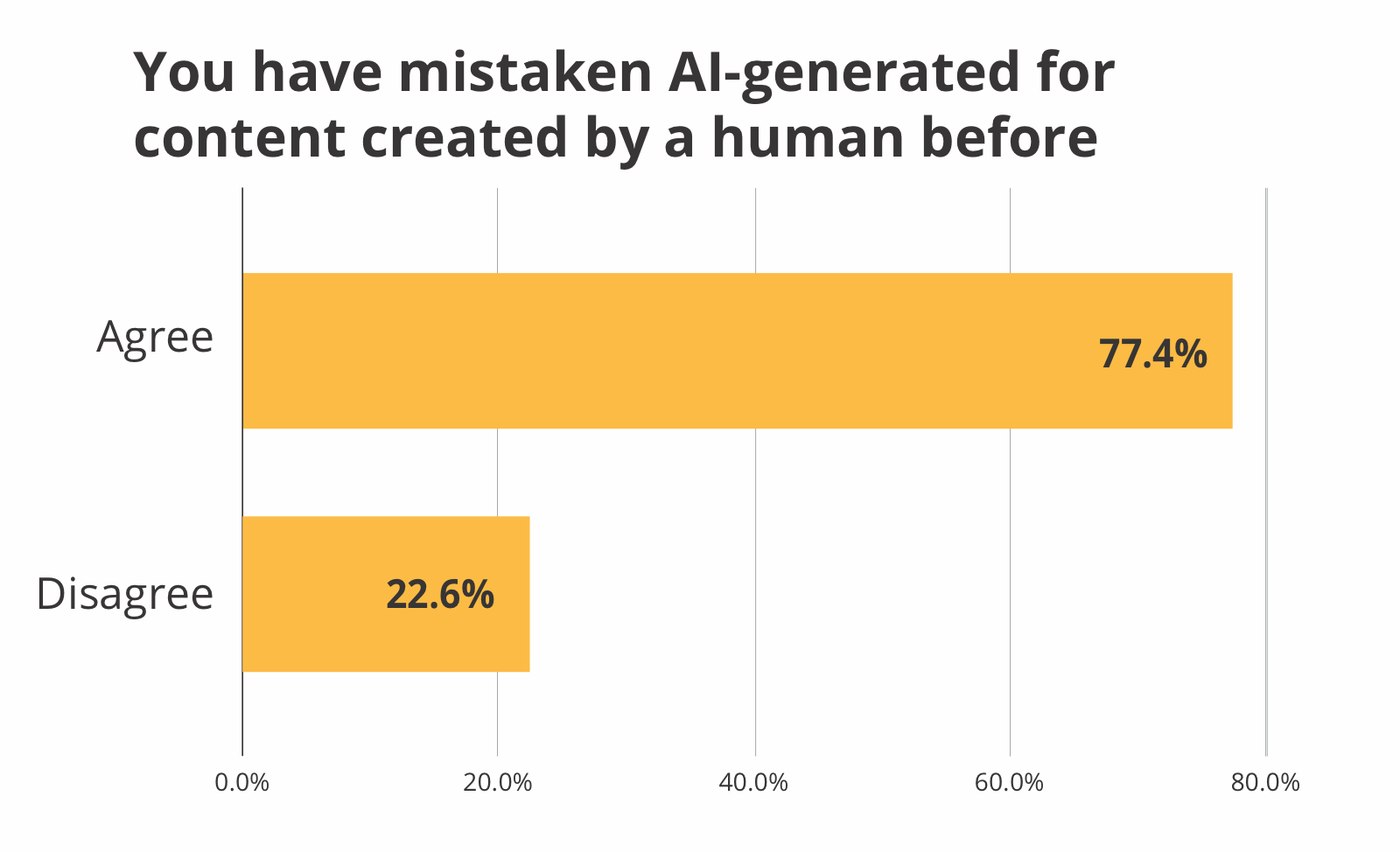
Our survey shows that 77.4% of people mistake AI-generated content, and a noteworthy portion of the population (36.9%) is not confident about distinguishing it from human-made content. In countries such as the US or Japan, this number is even higher (50.4% and 60.4% respectively).
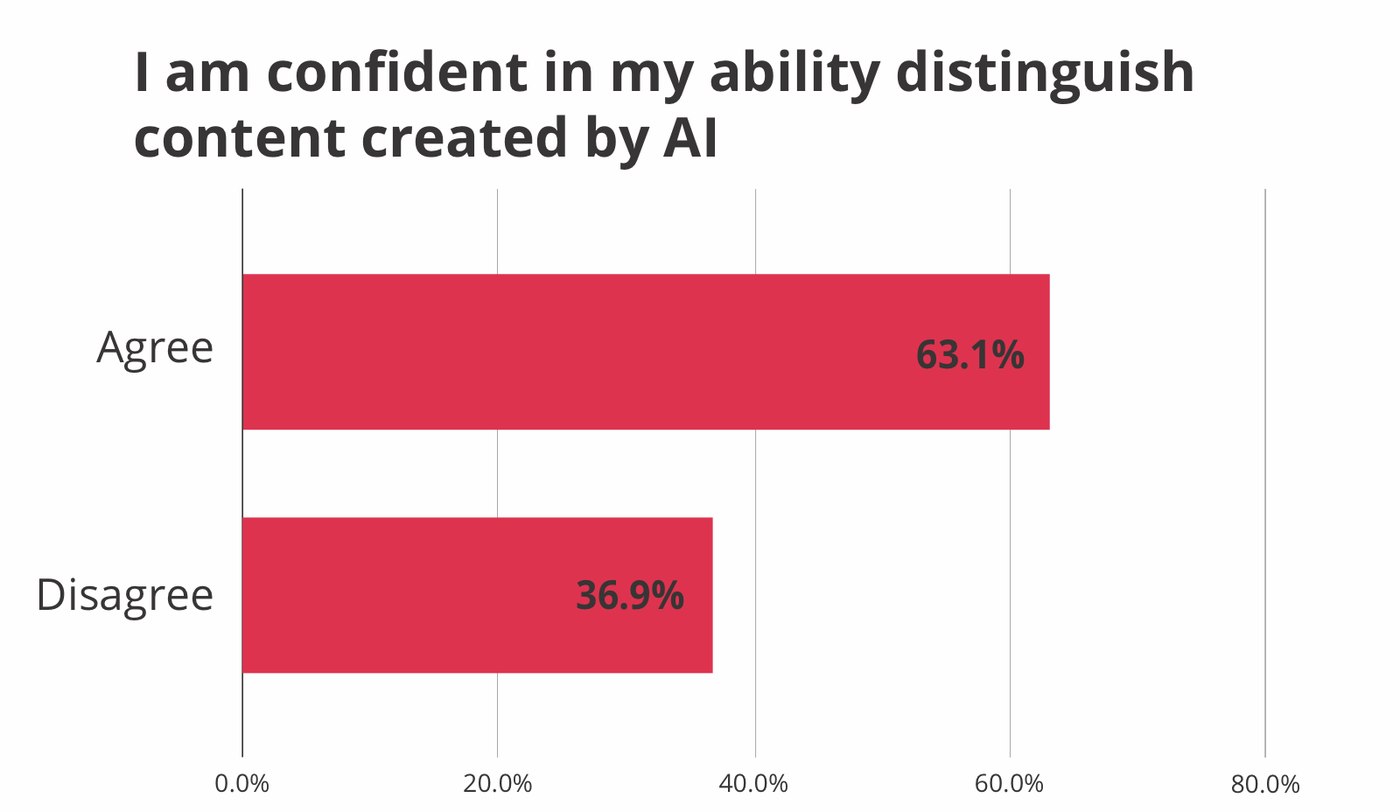
In reality, the responsibility to guide AI is collective, and the language industry is uniquely positioned to convey the importance of injecting linguistic and cultural subtlety into content to improve its impact.
#3: Quality is in the eye of the beholder
In recent years, much of the industry debate has been focused on language quality. What it means, how to define it, and how to maintain or improve it. AI’s ability to assess translation quality at scale provides quasi-instantaneous feedback and, if properly tuned, suggestions to improve the text. This has upended tried-and-tested human-centric quality assurance processes and led to a healthy debate about the merits of leveraging AI to streamline traditionally time- and labor-intensive processes. We’ll delve into the relative merits of using AI for quality assurance later in this issue.
But let us touch on one of the points of consensus in the language industry — that quality is an integral component of the end-user’s experience when engaging with a brand. Most will agree that a crucial variable influences this experience even before it begins: the user’s desired outcome.
So how do you reconcile the notion of language quality — a topic of great importance to the language industry — with what the user wants, when, for all intents and purposes, their desire is undecipherable? Though inefficient, a blanket or “standardized” level of quality across languages and content types would be one approach. If you consider high-risk or potentially life-altering scenarios where incorrect translation can have dire consequences, then yes, you cannot compromise on quality. But, in some situations where you need surface-level information quickly — say, what the weather will look like in Florence two weeks from now because you’re planning a trip — you should be fine if the result is not 100% accurate (because as a user you also assume weather forecasts are not entirely reliable beyond a certain number of days in advance).
When debating the relative merits of language AI and how it can be applied in conventional localization scenarios, a frequent answer is that it is not an out-of-the-box solution for providing high-quality, accurate multilingual content. This has been well-documented, and we have the data to support the case. But perhaps we’ve been asking the wrong question.
Shouldn’t we be focusing on the user’s desired outcome for their specific use case at the point in time when they’re engaging with the content?
Argos’s end-user sentiment survey is highly revealing, with 70.9% of respondents claiming they don’t mind a language error as long as they get the information they want. The question has been asked in a vacuum, without asking the user to imagine a specific situation, so this would look different if you were in a life-threatening situation.
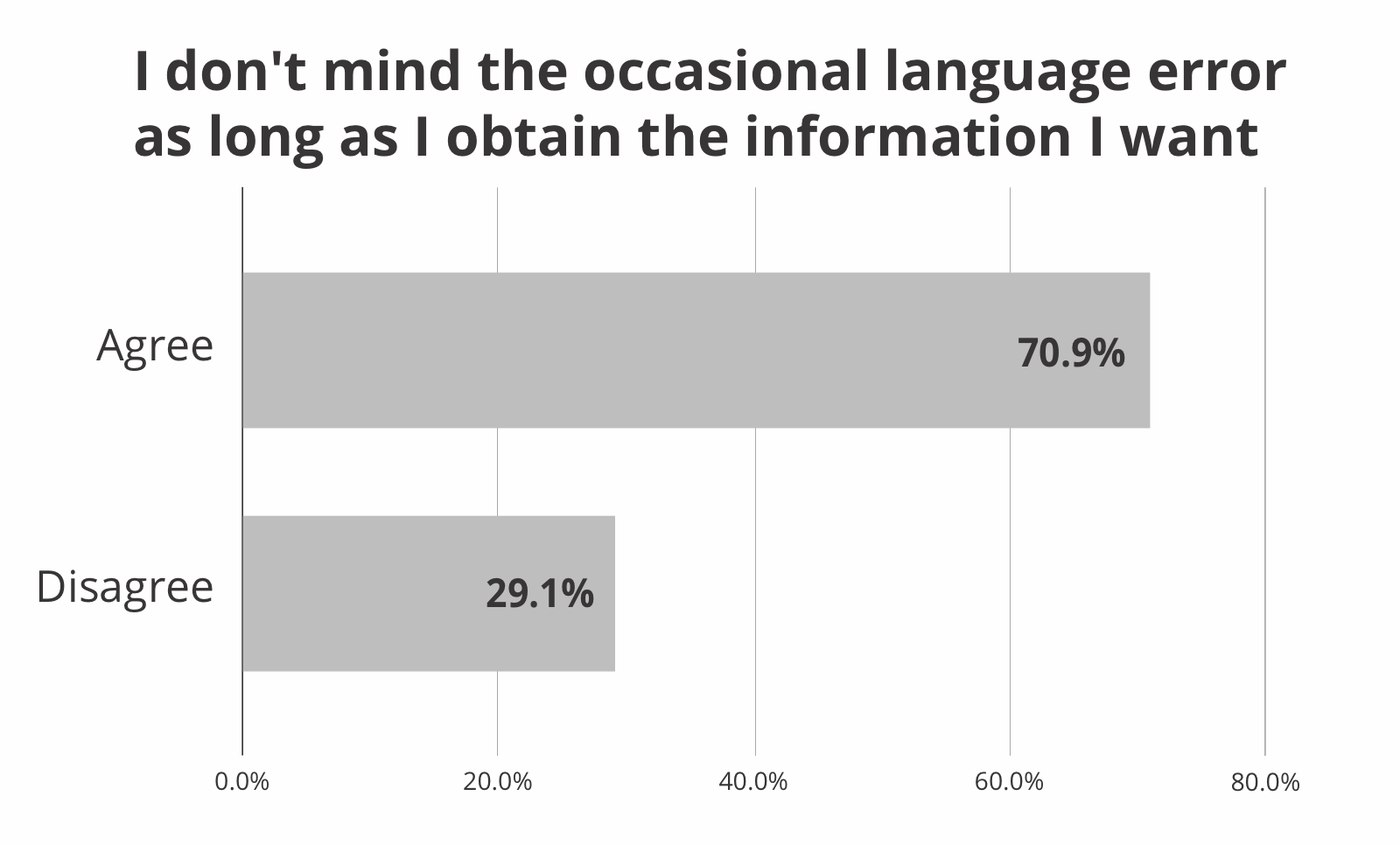
However, two related questions come to the fore and will look very familiar as we continue our evolution with AI: Does language quality matter if the user accomplishes their goal? And if so, how? Both of them remain, for now, distinctly open-ended.



-
Alignment in the AI Age
Alignment between technology and the people who use it determines whether AI deployments succeed, drawing on lessons from a global volunteer organization.
-
Setting up Language Technology for Inclusive and Non-Binary Language
Inclusive and non-binary language poses concrete technical challenges for translation memories, machine translation, and terminology management.
-
Out of Touch: What Is Happening Outside the Language Industry Bubble?
Outside the language industry bubble, buyers frame localization in terms of growth and market entry rather than words, quality scores, and workflows.