
Libor Šafář
VP of Growth at Argos Multilingual

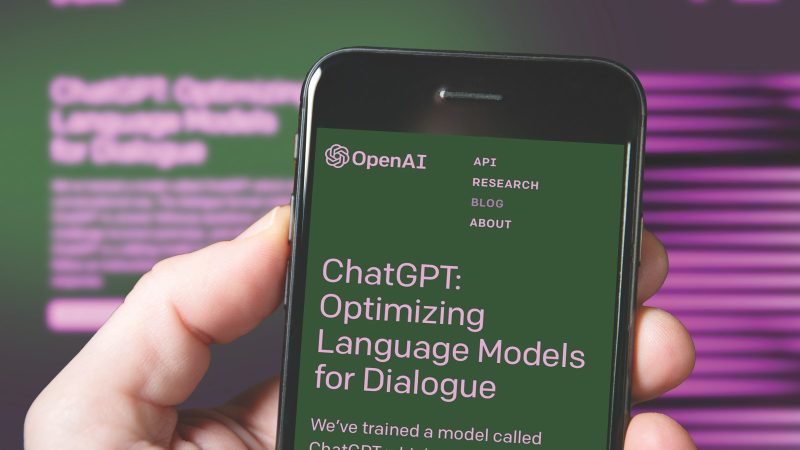
It’s such a popular question, isn’t it: What were you doing when? When we landed on the moon (yes, we did). Or when 9/11 happened. But what were you doing when ChatGPT was released back on November 30, 2022?
Some of us in the language industry saw this coming, some of us were blindsided. Many got very excited, verging on irrational exuberance. Still, others were skeptical, but only a small minority was indifferent.
ChatGPT hit the market as perhaps the first major consumer AI “application,” and initially totally free, for everyone to play with. It was the beginning of the AI boom.
The reaction was a similar story in the language industry. With one particular twist — AI has become the best advertisement (N)MT could have wished for. It has given it a “new lease on life”, at least for the near future.
Asked how they’re using AI internally, many enterprise localization teams can proudly say: actually, we’ve been using AI for years, we’ve just been using a different name. This is how it works. This is how it differs from what you might call AI. And these are the use cases where it will still beat AI easily.
Everyone attending any language industry event over the past two years would have seen presentations showing the much-hyped Gartner hype cycle for AI. How we’re at the peak of inflated expectations, just about to experience the inevitable disillusionment.
But AI is not going away. It will continue challenging us, and what we need to do to stay relevant.
Where are YOU on the scale?
This is not to say that everyone has been buying the hype. Those ready for the upcoming disillusionment phase have some valid arguments, such as:
- LLMs were never made for translation (but can be trained for specific tasks)
- AI is slower than MT
- It’s expensive
- It’s error-prone
- It can’t be trusted
- It’s not universal: LLMs are much better in high-resource languages or specific combinations
- There’s limited NLP expertise in the industry that hinders application
And yet, even AI skeptics seem to accept that LLMs will be the future, eventually. When? Opinions differ, but the general belief right now is that we may need 12-24 months for LLM-based workflows to level up to those built on MT.
But this won’t just happen.
There’s an interesting divide between those who prefer to wait and see until the situation becomes clearer, so they can take the right path and move fast then, and those who are “all-in” already.
Main factors? Levels of risk-aversion, organizational context, resources available, tech mindset. Being a fast follower is as viable a strategy as being the first mover. But getting the timing right is crucial, and notoriously hard. And fortune tends to favor the bold.
Grasping the AI mettle
AI has also become the new litmus test for every organization’s ability to act and react, pretty much like Covid was a few years ago. AI is new, it’s big, it’s hairy, and there are no certainties.
It’s complex and requires sound cooperation between teams. Which is why internal culture and organizational issues may either help or hinder just about every AI implementation.
And this is not merely a divide between high-tech enterprises vs. everybody else, or even big vs. small. High-tech organizations, big and small, may equally struggle with adopting or productizing AI.
There may be inertia, a lack of coherence, competing interests, and a fragmented structure. These are all potential barriers.
Every organization where the internal culture is sound is set to benefit from AI in the years to come. Because they will figure things out and will be able to act fast.
The optimist’s manifesto
The past few decades in the industry have seen some serious innovation and professionalization. It was goodbye to translating resource files in Microsoft Word, and hello to TMs, TMS, MT, and all that jazz.
Afterward, it was mostly incremental innovation. The industry got larger, it got smarter, but there wasn’t so much real change under the hood. If you knew how to use a translation tool in the past, you could get up and running again a decade later, like getting into your old car you know so well.
But now it’s getting really exciting again.
ML and LLMs have the potential to massively change the way translation is done. Not just to replace NMT at some stage, but to reconfigure the way multilingual content flows from the source to the consumer, and all the plumbing that goes with that. This means more multilingual content than was humanly possible to date.
Sure, the path ahead is still long and full of potholes, but a number of progressive organizations already have their goals set very clearly: being able to provide any content, in any language, at every interaction their customers have with them, also internally. And all of this optimized for their company’s unique tone of voice.
This has been the ultimate goal in the language industry well before I was even born. AI should be able to make this possible. And every globally ambitious organization, regardless of its size, might adopt this goal. It’s ambitious. It’s memorable. And it ties directly with any business’s objectives. Making language for their businesses a “non-issue.”
At the moment, AI is forcing everyone to take a fresh, hard look at their current processes, break them (again!) into individual tasks, assess their current value, and see which tasks can now be better automated with AI. This is a great by-product of the AI revolution.
The future of localization teams is… bright
Multilingual AI is creating a new opportunity for localization professionals to raise their profile within their respective organizations.
Every localization team in the world has (too) many jobs to do… yet one that is often overlooked, and even more often underrated, is internal education. Do it well, and you will have fewer problems having your role and value appreciated.
With multilingual AI, there is a huge demand for “actionable” education within just about any organization. This is where internal localization teams can, for instance, easily build on their existing, and often massive, knowledge of what-used-to-be-called-MT-but-now-goes-by-the-name-of-AI.
It can be an internal hub on multilingual AI, or a resource library. It can involve documenting and communicating your own journey (experimentation and application) with multilingual AI.
This is great knowledge, and it’s specific to your own organization. All it takes is some good promotion. Internal education is effectively internal marketing on steroids. And now is a great time to nail it.
…and here’s why
“We’re using AI, so why are we actually still paying for our translations?” Just about every localization leader has been asked this question by their executives. The good news is that in-house localization teams will have a major competitive advantage in the age of AI. I’m sure of that, despite constantly hearing about waves of layoffs in the language industry these days. Here are a few of the many reasons:
- They manage and understand the language assets in their organizations, warts and all. This is essential for anything related to LLMs.
- They are the ultimate international risk managers. They know what can go wrong with the local language content their companies may publish, regardless of the source or the method used to produce it. And they know how to possibly prevent that. So many scars already.
- AI will continue to perform unevenly across languages or language combinations for some time. Any cool stuff that will be possible with one language will not automatically translate into all the others. So many potential show-stoppers right there.
Perception is reality, as they say, and so some internal rebranding and marketing can go a long way. But their unique expertise will become even more important than it is now, not less.
AI sanity checklist
With AI too big a beast to ignore, I see forward-looking localization professionals adopting a very similar mindset. Let’s call it an AI sanity checklist:
- It’s impossible to know everything about AI, how it works, what everyone else does, or even thinks. It helps to have a game plan for what you want to learn and what you need to understand (and then apply it).
- Decide, also, what you don’t need to learn in-depth.
- Build (and grow) a short list of resources or experts you trust and from whom you plan to learn.
- Take stock of what you already know. Nobody starts from scratch. Anyone working with languages is, by definition, some sort of an expert in NLP already.
- Get your hands dirty using LLMs. Nothing beats getting hands-on experience.
- There’s so much pressure to get stuff done with AI… It’s easy to feel overwhelmed and perhaps paralyzed. But feeling this may be a good sign; it may mean you’re actually already ahead of others.
On the other hand, we all have the right to forget about AI when we feel like it. It’s not — and won’t be — everything. There’s much more to being a human: the human experience. Our human language models (called a brain) have zillions of years of building and fine-tuning behind them already. That’s another reason to take this AI hype in our stride.




-
Quality in Translation: Back to Service
Automation has made service a rare commodity in translation. Why client relationships, not throughput, increasingly define quality.
-
Alignment in the AI Age
Alignment between technology and the people who use it determines whether AI deployments succeed, drawing on lessons from a global volunteer organization.
-
Meanwhile, in Marketing Land
Marketing adopted AI early and fast. What its experience with hyper-personalization, plagiarism risk, and consumer distrust signals for localization.