With Esteban Hack, Ana Ferreira, Nathalie Zimmerman, and Allie Brown
If you are interested in learning more about these talented people, please contact them directly via their information below.
Antoine Rey: 0:18
Hi everyone, my name is Antoine Rey, and we’re doing yet again another special episode of Global Ambitions. Once again, our industry is being challenged, and there is a lot of movement in the industry, leaving a lot of our colleagues looking for a new home and role. So we’ve decided once again to open up Global Ambitions platform to those candidates and connect them with subscribers and listeners.
And today we have Esteban Hack based in the UK. Esteban speaks figs. So, Esteban, the floor is yours.
Esteban Hack: 0:53
Awesome, thank you so much, Antoine. Thanks so much for having me. Hi, my name is Esteban. I am a localization and project management professional with about 10 years of experience across both the language service provider side and the client side environments, where I’ve led high-volume multi-market localization projects and programs that span software, marketing, entertainment, and complex regulated content such as clinical trials. Most recently, I worked at Atlassian as a localization manager where I ran agile localization projects across marketing campaigns, cloud migration content, and customer support assets to reach and connect with global audiences. Before that, I led localization projects in the life sciences sector, managing clinical trial content that involved in excess of 750 contributors at a time under pretty strict ISO certified processes. And early in my career, I managed large-scale marketing localization for technology, gaming and e-commerce clients, leading internal linguistic teams, and larger freelance networks and mentoring junior project managers as well.
1:59
In terms of what motivates me personally, I think essentially it’s the people involved in the work, colleagues, clients, suppliers. I genuinely believe that you know, strong outcomes come from teams who feel supported, informed, and valued. Because at the end of the day, you know, when deliverables are shipped and rituals are done, the impact that I care about most is the positive change that makes work a place that people want to be, whether that’s through sustainable and scalable operational improvements, I guess, or tackling challenges for more meaningful enhancement of working lives. Because you know, the majority of us work five out of seven days a week, which is a lot, right? So shaping that environment as nicely as possible is paramount, I think.
2:35
So looking ahead, I’m focusing my search on client-side localization roles in tech or fintech, where I get the chance to directly help shape localization strategy for growth. And I’m also open to roles in organizational transformation, people and change management and operational transformation. So if anyone’s looking for an experienced localization manager or an entry-level project assistant or change analyst, I’d absolutely love to hear from you. I’m currently based in the UK and I’m looking for a remote first position, but I’m also open to relocation to anywhere in Europe and North America for the right role. So yeah, thanks so much for listening. If anything I’ve shared resonates, then feel free to reach out, but I’d love to connect.
Antoine: 03:21
And Esteban, you’re available right away, right?
Esteban: 03:24
Absolutely available right away.
Antoine: 03:25
And everyone, we will share Esteban’s details below. So feel free to reach out directly to him and good luck, Esteban. We’ll keep an eye on what’s happening.
Esteban: 03:34
Thank you so much. Really appreciate the time. Thank you.
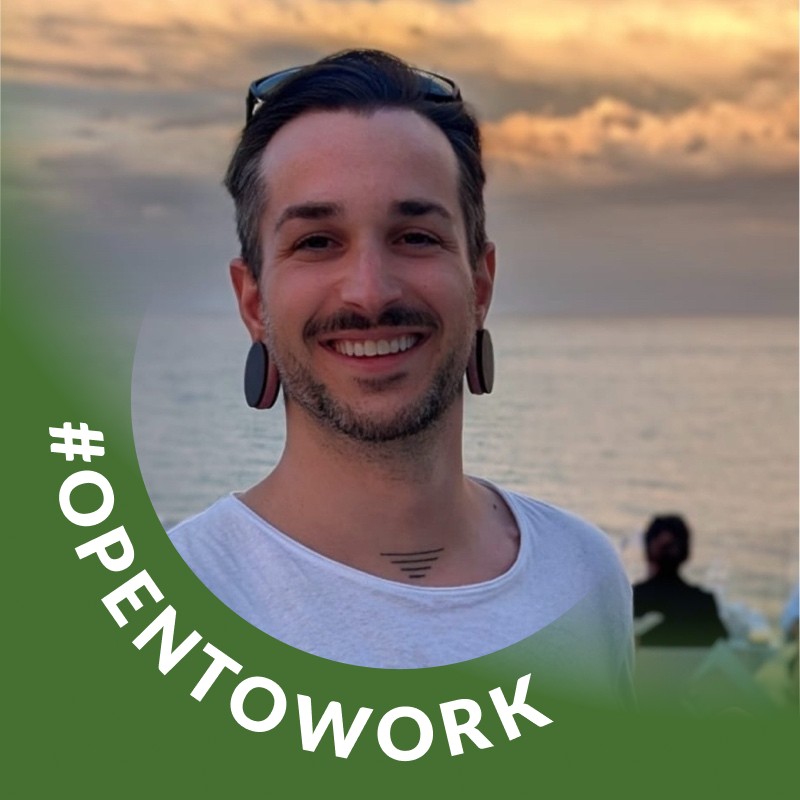
Esteban Hack
Antoine: 03:38
Today we have Ana Ferreira. Ana, welcome to the program. The floor is yours.
Ana Ferreira: 03:42
Thank you, and thank you for having me here today and this opportunity. My name is Ana Ferreira. I live in New Jersey, right outside of New York City. I was born in Portugal and moved to the US as a child. So I very much grew up in very multicultural, very multilingual environments. And when I was young, I knew that I wanted to work in an international business environment. And after college, I landed at Transfer Infect and started my localization journey about 15 years ago now. So it’s been a really fun adventure. I’ve worked predominantly with a lot of agencies focused on marketing and creative adaptation with a lot of really fun brands. Started with IHG when I was with Friedman and worked with Google at Jellyfish and a few other really fun brands from consumer brands to also a lot of SaaS and software localization related.
04:38
Most recently, I had a really fun opportunity. I spent four years almost at Axon. It is a Gov Tech company, so both SaaS and hardware and devices, so a huge range of products. I started in marketing. I came in as a localization project manager within the marketing strategy and operations team where I spent my whole time. I had really great leadership there. I was able to start a program from scratch, at first focused on marketing because that’s where I came in and built everything from the ground up. I centralized the vendor network, I built glossaries, we built style guides, we created TMs and over time started training MT engines due to volume and prioritizing languages depending on demand. That was really fun. And then as it happens, the rest of the organization wanted help as well. So I started moving into product and supporting the product localization and queries that were happening across the various products that they had that started going into technical writing and our go to market initiative. So because it is a government and a lot of weapons and slightly more litigious industry, we had a lot of documentation required for our tenders. So everything from pre-sales to during the sales process to also post-sales, we had built a really great curriculum, for example, for Taser. That team was amazing. We built a training curriculum that we localized into 16 plus languages, both e-learning as well as in-person training curriculums with a lot of exams and forums and PowerPoint decks, videos, a lot of subtitling. And I also support started building relationships as well with a lot of our technical writing teams and supporting them in building content and translating content for the high demand across different products and markets. Some products ranged from seven languages, other products were 20 to 30 languages. So also not consistent across the brand, which kept me on my toes, that’s for sure. It was a really fun opportunity there. I was able to bring someone in as a project coordinator for localization because one person can’t do it all. And that opened the opportunity for me to also lead a TMS RFP, which took around 18 months. It was really exciting, very litigious process as well, very highly documented with a lot of cross-stakeholders from across the organization involved.
07:05
With that, also I know my limits and I needed help for the onboarding. So I recruited a senior architect to support with the migration of 22 plus pipelines into phrase strings. We landed on phrase, and that was really fun. I had a little mini team going and absolutely amazing people. And yeah, so by the end of 2025, when I left Axon, we were already deep into the onboarding, exploring AI workflows and really leveling up for the international scalability that this company required. So it’s been a really fun adventure over the past 15 years. I’m really excited to continue exploring more angles of localization, especially with the industry shifting and changing as fast as it is. I’d love to explore opportunities that build on the operation side of content management and scalability, but also of any like localization, senior project manager, localization manager, and just supporting brands to go global in a scalable and really deeply nuanced way because our customers globally all deserve that. And I truly believe in the customer experience internationally is one of the coolest things we get to do and to build that and be part of that. It’s super exciting.
Antoine: 08:21
Thanks very much, Ana, for sharing this with everyone. Like where you have a very broad background, both from a brand perspective, the brands that you worked with is very interesting. The experience that you have not only with suppliers but also with stakeholders internally, I’m sure will be appealing to a lot of people. So thanks for sharing this. And we will share Anna’s details at the bottom of this episode so you can contact her directly in there.
Ana: 08:45
Thank you for having me. Thank you for the opportunity. And I love connecting with people in this industry, so I’m always happy to just talk and chat and learn and share what I know and keep this cycle going. So thank you, everyone.
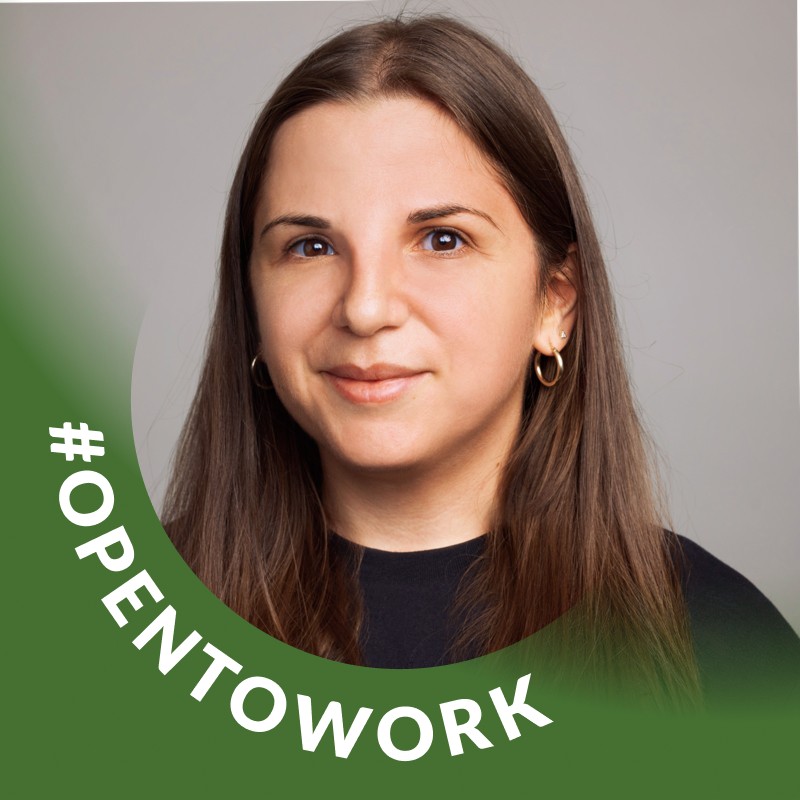
Anna Ferreira
Antoine: 08:59
Today we have Nathalie Zimmerman. Nathalie, welcome to Global Ambitions and I’ll let you tell us about you.
Nathalie: 09:06
Well, thank you very much. I’m happy to be here. I was an au pair who married an American, and an American guy told me, hey, why don’t you go to Microsoft and see if they have jobs? So I went into Microsoft in 1990 and got a job in the project management team where I localized Microsoft projects into French for Windows, Macintosh, went on to many other things, and after 10 years, they asked me to go to Ireland and I said, sorry, it’s too late. I’m already married, I already have children, but anyway. So from there I went on to some very cool company like World Data, they were ballot leader. Encompass was a company that was owned by a Japanese person who kind of went body up a year later, and then we went to Getty Images for a gig for one year, went back to Microsoft multiple times in OS contracts and had fun with Space Labs healthcare, which was the localization was pretty intense there. And ended up with Cisco. I always felt like for the two years I spent there, I I never really understood what I was doing, but hey, they were happy with me. So and then I found Precor and went in, got an interview, and they hired me on the spot, and that’s where the fun started there because they didn’t have any uh localization whatsoever. So I built the concept. I hired Argos, which already worked with Argos back in at Space Labs actually, and then we went on to doing some great work, and the company was always good to help save money for pre-core and uh trying to find you know thinking outside the box. Because there were times where we had new CEOs, we had quite a few, and one of them was no, I don’t want to spend $36,000 on doing technical documentation. So it’s like, okay, how are we gonna do that? By showing savings basically.
11:07
And then it went on, and I was able to come to France and work for France, which was a lot of fun but difficult in certain areas. Lots of work that I was doing. There were some restrictions with the French, you know, way of doing work where I was only allowed 35 hours, but I work a lot more than that. But you know I always liked what I was doing, so that was kind of good. I also got the chance to travel to France back in 2014 through about 2018/2019 and visit our Amer offices, including Suunto in Finland where I gave a two-day l10n seminar, and then Salomon in Annecy, Precor in England and I also visited the Italian team etc. For one year, I was asked to share my time between the Amer offices and Precor to teach the in-country review processes. And then went back to America after things changed at the office with management and uh work from home there. And then I was summoned to go spend two days in the office every week, which I did. And things changed. I always loved doing what I was doing, and unfortunately, I was thanked for my services, and it was difficult, but you know I’m not giving up, I’m gonna continue looking, hoping to find my next gig soon.
Antoine: 12:05
Great and what are you interested in uh going forward then, Natalie? What type of work in localization?
Nathalie: 12:11
I’d still love to work in the marketing aspect. I mean, I work in marketing, I did technical documentation, I did UI, I did customer service. So marketing is fun. Anything that I can help with, I’m happy to get into it and do it.
Antoine: 12:29
So you used to work with a lot of internal stakeholders and external suppliers, yeah?
Nathalie: 12:34
A lot of internal stakeholders. I manage the entire localization for Precor at that time, and obviously continue working with Argos the entire time.
Antoine: 12:43
Nathalie, best of luck with this, and we’re happy we can make Global Ambitions available to you. And I’m sure we’ll see you again very soon.
Nathalie: 12:50
Okay, keep in touch. Bye.

Nathalie Zimmermann
Antoine: 12:55
Hi, Allie, welcome to the program. The floor is yours.
Allie Browne: 12:58
Hi, everyone. My name is Allie Browne, and I am based in Los Angeles. I graduated from the MIST Translation and Localization Management Program in 2014. I worked for two years seller side and I have nine years experience working buyer side. I was at Snap Inc. for seven and a half years, and most recently I was at Netflix for about one and a half years. My previous roles, I was mostly doing project management, but also a couple of program management things sprinkled in there, primarily focused on product localization and working to push localization quality further upstream. At Snap, I helped to localize pretty much all consumer products like Snapchat, Bitmoji, and Spectacles, as well as some B2B products. And I was kind of the go-to person for marketing localization. And then at Netflix, I worked on also the product localization team, really working with growth as well as the Netflix Preview Club.
13:49
Going forward, I definitely want to focus on program management work that is more strategic work as opposed to sort of traditional project management. I like to figure out how localization fits into broader business conversations. As localization professionals, we know there will always be demand for our expertise, but many times we need to be nimble and figure out, you know, how we can code switch depending on who we’re talking to. Some of the best work I’ve done in my career so far has been in the education and socialization space, talking to non-localization folks about what they can do in their day-to-day jobs to set us up for success, but also take ownership of all versions of their product, not just the source or like the English language version of their product. And thinking about program management work, I am particularly interested in tooling as far as TMS and the CMS ecosystem, of course, product project management tools, but of course, integrations with programs like Slack, email, Jira, et cetera, Asana. Documentation, anything that really kind of sets us up for success. Some of the titles I’ve seen in this space might be somewhere around like solutions architect, but you know, I’m very interested in workflow optimization and particularly when it comes to working with engineering teams. I think it’s important to state that the localization industry will be affected by AI. We’re kind of already seeing that. And I think we need to really be thinking creatively about how we can incorporate AI into our workflows. I’m pretty open about how I really want to automate myself out of doing the really tedious, repetitive, and kind of time-consuming manual work. I don’t think that’s where we as humans can really add value. And yeah, I really just want to make sure that we’re keeping up with some of the latest tools and trends. And I’m sure we’re all hearing about AI localization. And of course, there are opportunities there, but we really need to not dig our heels in and, you know, just kind of stick to the traditional what we’re used to, what we’re comfortable with. And I just think there’s a lot of opportunity here. We just need to try and get ahead of it.
Antoine: 15:39
And Allie, I think that’s great that you have that ability to adapt and willingness to adapt to change. Like we’re seeing a lot of that, obviously. You’ve mentioned the strengths of having the ability to talk to different people. We talked about this with Julia Greco, one of the consultants in the industry, about being an anthropologist, as in being able to speak the language of the different stakeholders that we’re working with, and that’s so important. So you have some great skills in there for everyone. We will put Ali’s details in the scripts there. So please do feel free to contact her directly and connect with her. Okay. Thanks very much, Ali.
Allie: 16:12
Thanks so much for having me, Antoine.
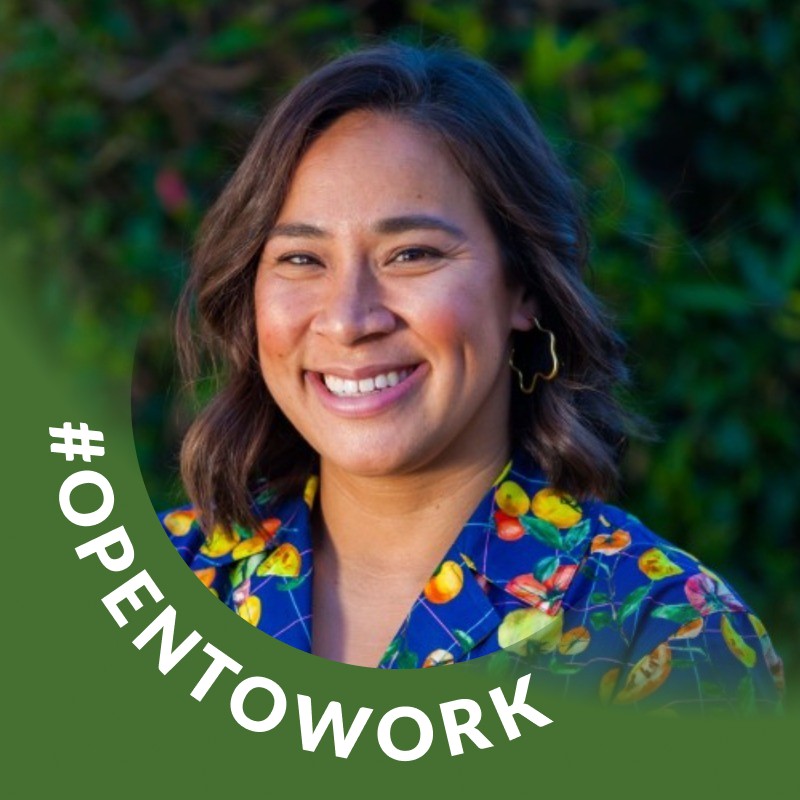
Allie Browne
-
The Loc Manager’s New Toolkit with Casey Garland
Accessible AI tools are changing what non-technical professionals can accomplish in localization, turning ideas into working prototypes and reshaping how teams collaborate with engineering, design, and leadership.
-
Getting a Head Start on Work Experience
Ep #22 – Jun 8, 2021 – Calvin Westfall, President of the Translation and Localization Club at BYU talks about how the organization helps students get work experience.
-
Transition Above Localization
Ep #8 – February 23, 2021- Minette Norman tells how she transitioned from leading localization to Vice President of Engineering Practice at Autodesk.