

Act 3: Reframing the Scene
What does the future hold?
Chances are, every person you ask this question will offer a different answer. And that’s as it should be (let’s leave the probable-words-in-a-sequence prediction to something else). The future will likely be composed of a multiplicity of parallel realities, much like a multi-colored glass vitrage.
Any discussion about the future comes with its share of responsibility. A responsibility toward ourselves, the teams we work in, and the communities we are involved in. A responsibility for those who come next — the next generation of talent that will be entering our industry.
When reading this closing section, ask yourselves: What are YOU doing to affect those around you positively?
Claudia Francesca Müller
Team Lead Content Design and Localization at Trusted Shops

Have you ever experienced the elation and frustration that go hand in hand when working with content and translation?
The elation (however fleeting it may be) that comes when things magically click and content creators and translators work collaboratively, co-creating memorable user experiences. Or the persistent frustration that surfaces when translation is disconnected from the creation process, often relegated to an end-of-chain bottleneck. Some of these feelings (I’ll trust you to connect the dots) are rarer than others, and this is where the problem lies.
Too often, content is released into the world without much thought for how it will resonate in the target markets, not because creators don’t care, but because the process never prompts them to. In the meantime, translators seldom get a seat at the table where the source material is being decided upon.
What if we rethought what creation means and reorganized the entire creation process? What do we stand to gain by doing so?
Bridging the content/translation divide
The way we’ve been going about creating and translating as two separate activities in a sequence, and sometimes quite far removed from each other, no longer serves our purposes. Sequestering creation and translation has brought us to a point where, too often, insufficient attention is being paid to the ultimate goal — what is the content intended for?
How do the end-users benefit? Will they read/click/buy? In theory, the translators and localization professionals help with this (but lack the glamorous job title that conveys this importance, such as UX writers). They are the ones who add the local nuance or impact. In practice, they arrive too late in the process.
For the longest time, there has been a source (i.e., the original content) that has demanded all the attention of the company and the creators, and after that came the translation, dutifully serving this source and working within the imposed technical and creative constraints. This hard-coded sequence is ripe for disruption, and we should disrupt it. And no, it’s not just AI that‘s doing the disruption.
I propose something that‘s not as radical as it sounds: Let’s redefine content and how it’s created and distributed by putting the creators and translators in the same room.
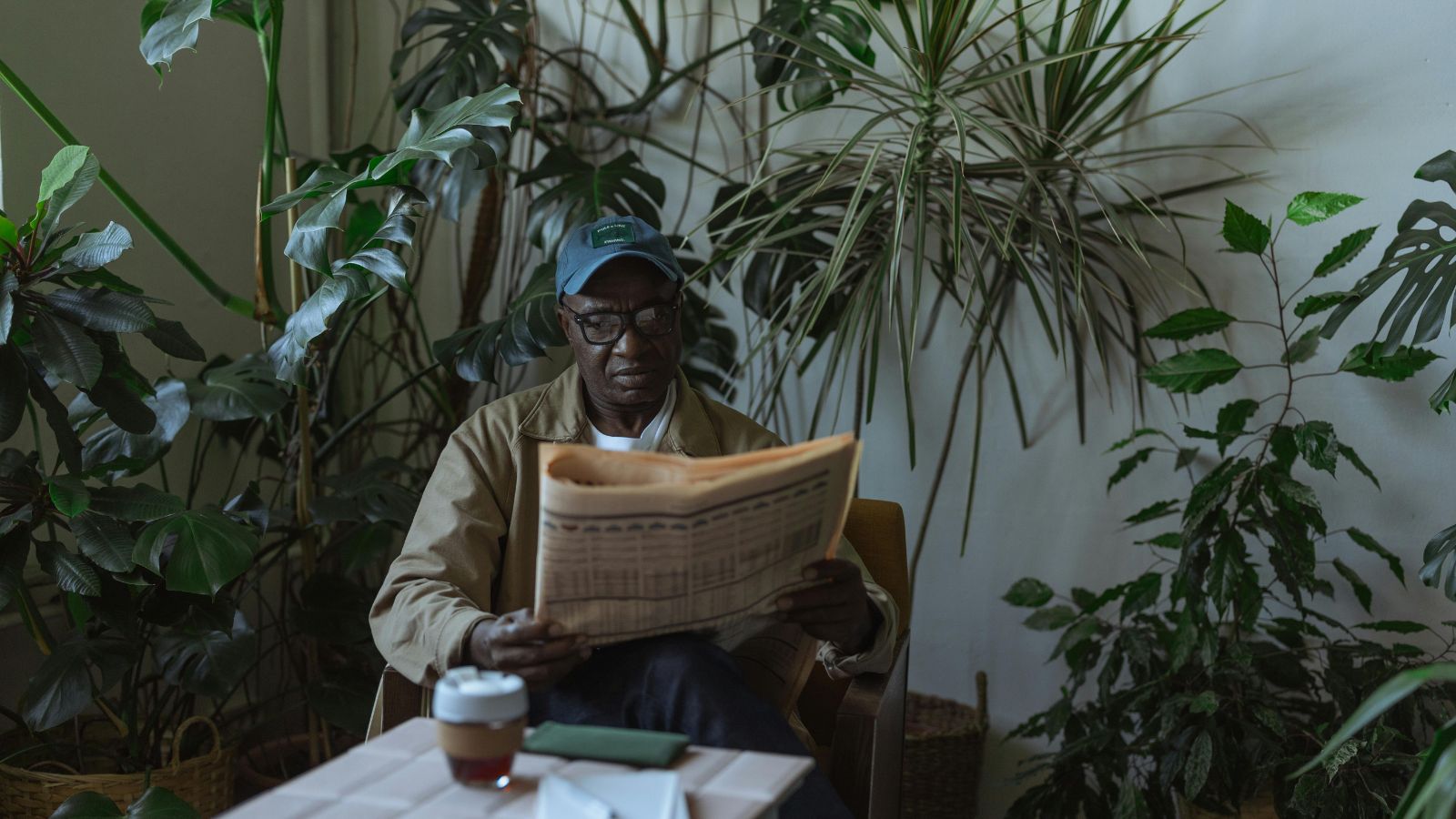
The ongoing AI (r)evolution presents us with a golden opportunity to reposition content creation and translation as parallel activities originating from the same room. AI actually helps us achieve this vision — with AI, we’re finally able to escape decades of string-based, segmented, sequential practices and move in the direction of concepts, knowledge graphs, meaning, and multilingual content generated at the source.
Too often, I see companies forgetting to treat content as the strategic asset it is. Some are doing this well (Netflix comes to mind as an example of a company that excels at creating original content for both global and local markets), and others ought to follow suit. At Trusted Shops, we are embracing it, putting UX writers, designers, and translators in the same room.
The questions I am asking you, dear reader, are especially valid today, when creating content en masse has become all but trivial (also thanks to AI). With all of us being “creators,” what distinguishes us will be the authenticity of what we produce — and just how much we can include the end-user perspective in whatever we create.
Content as a newsroom: rethinking how content is created and distributed
What I propose is the creation of a content newsroom: An internal engine that creates, articulates, and amplifies the company’s mission and message in so many languages.
This isn’t as if we were lighting a single match in pitch blackness, knowing it will fizzle out. Having had, throughout my career, a foot in both translation and UX writing I’ve come to see that while these disciplines may talk differently, the end goal is the same — crafting memorable user experiences. Our problem (and “our” applies to both the world of translation and UX writing) is that we have had a harder time articulating our value proposition than, say, the marketing department. Marketing can be directly translated (!) into sales. It’s a much more nuanced proposition to tie good UX content or a good translation to sales. This brings us to the question of how we quantify good user experience (although that’s for a different article at a different time).
So then, what happens if we sit everyone in the same room, collaborating between themselves and with the ever-more-present AI?
This shift tracks with what we’re seeing unfolding under the influence of AI. AI accelerates operations, enabling scale and forcing us to confront future-of-work questions. I believe we, the humans in the loop, are becoming professional optimizers and fine-tuners (emphasis on “professional”). Where UX writers will blend data with engineering and human sensitivities, translators will create and optimize meaning, ensuring authenticity, so the message stands out from the otherwise drab sea of AI-generated content.
With the content newsroom, the key principle is the proximity of the teams, and the idea of distribution of content in content blocks for different kinds of channels.
As a journalist, I remember being in the newsroom as information trickled in and the central question was always: “What are we doing with it?” Today, in tech and beyond, the same scenario is omnipresent — there is customer data coming in, and we have to decide what we are going to do with it. What‘s the best way to use the information? Do we need to send somebody out there and investigate? Do we do a social media post? Do we produce a report? These are the types of questions that govern decision-making, and the processes are shaped based on the nature of the input and its audience.
Sure, this type of work may take us away from what we were originally trained to do as writers or translators. The content newsroom may be a metaphor, but it’s also a model for how we can work alongside the machine: collaboratively and with a sharp focus on the user. Prioritizing meaning and intent to maximize impact. Because in the end, it’s still about the story we want to tell — and making sure users stay around long enough to listen.
Read the full 132-page Global Ambitions: (R)Evolution in Motion publication featuring vital perspectives from 31 industry leaders on the ongoing AI-spurred (r)evolution.

-
Heading Toward a Finer-Grained Localization
AI-powered translation can evolve beyond geography to personalize content for individual users’ domains and learning styles.
-
Everything Is a Product: Selling Innovation to the Crowds
Treat localization like a product: understand stakeholders’ needs, start small, iterate, and show value to drive innovation and impact.
-
AI Is Widening the Localization Divide
AI is widening the gap in localization—teams with clear strategies and tools are scaling fast, while others remain stuck in reactive, manual workflows.